‘The Christophers’ review
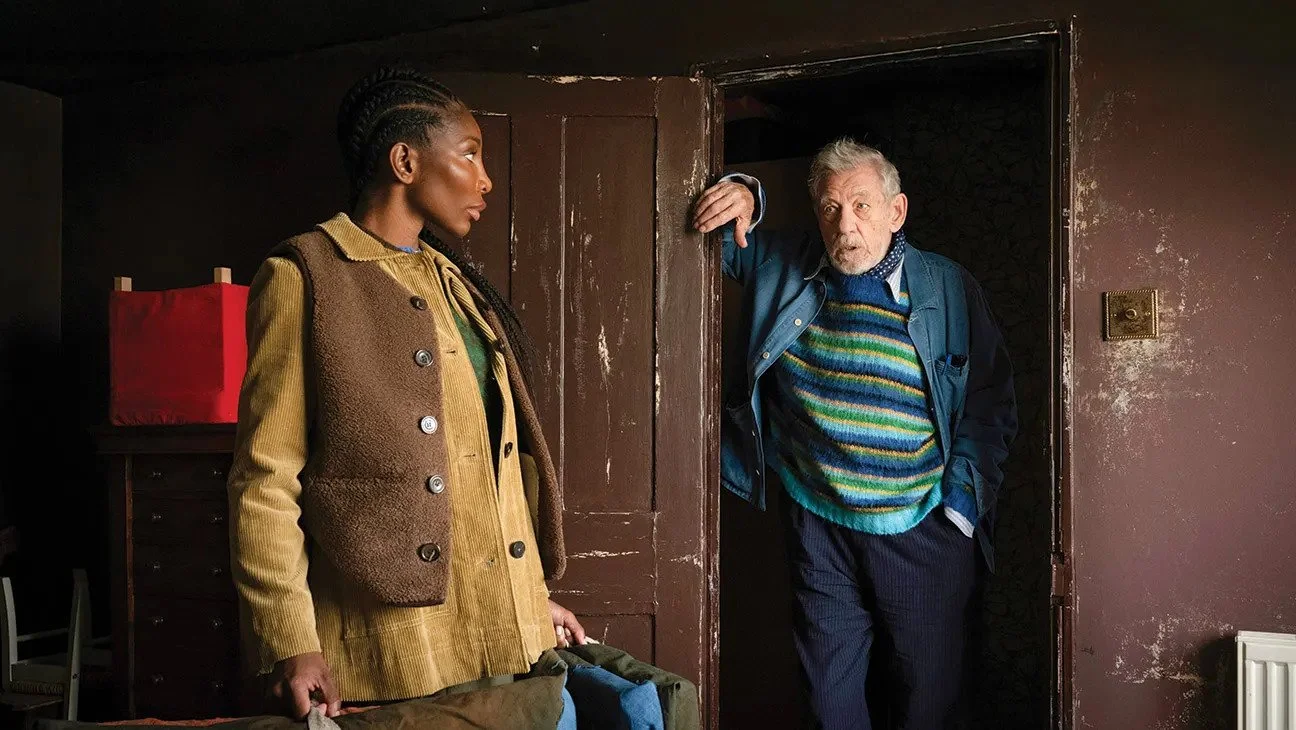
The Christophers presents itself as a low-key heist film in its first few scenes, when the failed offspring of once-famous artist Julian Sklar (Ian McKellen) hire forger Lori Butler (Michaela Coel) to finish his incomplete paintings so they can sell them off once he passes on. On paper, this seems like the type of slick fun that Steven Soderbergh can do in his sleep with a record that includes the Ocean’s trilogy and Logan Lucky. How is this down-on-her-luck artist going to get one over on the pompous, bloviating old man who looks down on everyone around him? But The Christophers refuses to go in the directions you think it’s going to take. It pivots from its intended objectives so many times that it morphs from a straightforward caper into a heartfelt tribute to the artistic process and the fine line between inspiration and destruction.
I’ve had mixed feelings on Soderbergh’s post-retirement output. I appreciate his willingness to experiment with iPhones and other forms of digital trickery, but most of his recent films feel like appetizers rather than full meals. I miss the days when he would blend his avant-garde indie instincts into slick studio movies. He still assembles good actors for decent scripts, but every film feels like a minor effort due to the microbudgets and his insistence on putting experimental cinematography first. The Christophers nearly avoids falling into a similar trap. Its limited scope prevents it from landing with a huge impact, but it makes up for its tiny budget with two superb leading performances. The relationship between McKellen and Coel infuses the film with an indomitable spirit that draws you into the artistic process.
I’ve been disappointed with the lack of great screen roles for McKellen post Lord of the Rings and X-Men. I don’t know whether that comes down to his lack of interest in film or people having a hard time casting him given his outsized presence. But with The Christophers, he gets to fully cut loose with all his delightful flamboyance and wicked intelligence. He makes the crackling dialogue sing as if it were Shakespeare, almost to the point where you’re afraid he’s going to blow Coel off the screen, but she more than acquits herself. She presents an unflappable stillness that absorbs all of McKellen’s fiery barbs.
The push and pull between these two giants is paramount to the thrilling plot structure of The Christophers. Both characters start off with destruction as an objective. Sklar wants to destroy his unfinished tribute to a former lover, and Butler wants to tear the old man down for reasons that become clear later. Despite starting off as opponents, the two can’t help but form a bond through their mutual intelligence and cynical worldview. They’re both stunted in their artistic growth by past rejections. The film lives in this world where the thing you love, the thing that’s your lifeblood, can rise up and destroy you if you let it.
It’s such a joy to watch these two broken people regain their artistic inspiration despite their best efforts to run from it. The free-flow nature of the film reminds me of the artistic process: you start with an idea, and over time, it morphs into something new, and you follow it wherever it goes. The end product turns out to be something you weren’t planning at all. Maybe you’re simply trying to copy another artist, but something else takes over and creates an entirely unique object.
As someone with little to no interest in art, I found the film’s commentary on its current state fascinating. There’s a healthy analysis of the conflict between monetary and cultural value. Is it truly Sklar’s artistic legacy that makes his unfinished paintings valuable? Does the quality of the pieces figure into their monetary worth at all? The film makes the refreshing case that it doesn’t matter where the art comes from. Death to the artist and all their intentions. All that matters is the art.
★★★★