‘Disclosure Day’ review
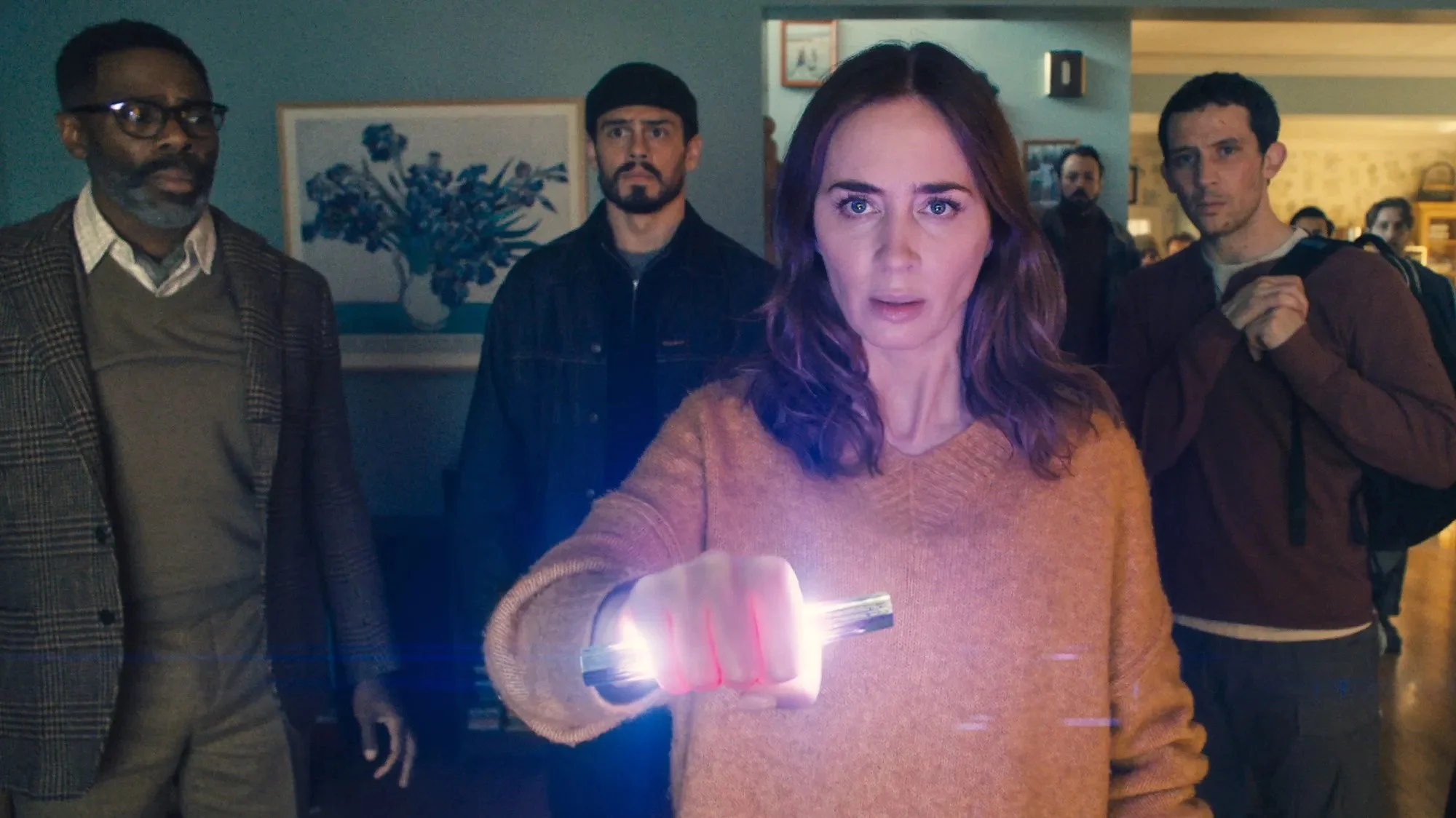
Part of me really wants to get on board with Disclosure Day’s message. I’m a sap who believes deeply in the healing power of empathy and its ability to break through hatred and fear. I would love nothing more than to live in a world where a benevolent alien force comes down to Earth, puts their arms out and says “be nice to each other,” and we actually listen. But I have a hard time wrapping my arms around this film because Steven Spielberg lives in a completely different reality from our own. When you make cable news a major source of credible information, portray private companies as reasonable entities, and insist that “the truth” will bring us together, your worldview comes off as naive rather than informed but hopeful.
Disclosure Day starts on a high note, offering glimpses of Spielberg’s best instincts as a filmmaker. We’re dropped into the middle of the story as rogue agent Dr. Daniel Kellner (Josh O’Connor) rescues his girlfriend from Noah Scanlon (Colin Firth), the head of the shadowy Wardex Corporation and Kellner’s former boss. Scanlon’s after stolen, highly classified information that Kellner plans to expose to the whole world, providing the building blocks for an exciting conspiracy-thriller chase in the vein of 70s Spielberg. For a guy who’s lost the instinct to let audiences figure things out for themselves, Spielberg shows impressive restraint with this film’s world-building.
You learn how the alien technology works through action and reaction. When you see the jack-booted, armed agents backing away in fear as Kellner holds an odd, futuristic-looking stick up towards them, you know that it’s serious business. I’ve heard some people criticize the line “he’s an experiencer, you can’t dive into him,” in relation to Scalon’s attempt to jump into Kellner’s mind using another one of the alien stick thingies, but that’s the kind of nerdy sci-fi world-building that I’m 100% on board with. I love when a movie throws out made-up terms without feeling the need to define them. That amount of confidence tells me the director thinks I’m smart enough to figure things out on my own.
It’s just a shame that Spielberg doesn’t extend that same trust to the audience when it comes to Disclosure Day’s themes. He and screenwriter David Koepp insist on forcing their characters to address the film’s ideas about the power of empathy and “the truth” to the audience in big blocks of didactic, groan-inducing dialogue. This is a problem I’ve had with nearly all of Spielberg’s output post-Munich, and I feel like a broken record bringing it up here. The man’s almost 80, and he clearly likes holding the audience’s hand, so no matter how much I complain, he’s not going to change. Why keep addressing this pet peeve?
And then I think back on Spielberg’s four decades of classic films, and I remember that a part of me still believes in him. I continue to ding his most recent efforts because I always let myself get a little excited when he puts out something new, let alone an old-fashioned conspiracy thriller with an amazing, eye-catching trailer. His incessant need to lecture the audience harms the overall quality of his most promising films. Compelling premises lose their impact due to needless hand-holding, and good actors embarrass themselves with cornball dialogue. While the top pros like O’Connor, Firth, and Colman Domingo manage to stay above water, the less innately skilled Eve Hewson and Wyatt Russell are lost at sea.
Spielberg’s pedantic tendencies would be much more tolerable if he still wielded the impeccable, tactile craft present in films like Minority Report and Munich. But to my immense disappointment, he now brings out the worst in his longtime collaborators Janusz Kaminski and John Williams. The team that gave us some of the best cinematography and music in film history now produces sterile images and anonymous scores. This has to be one of Spielberg’s ugliest-looking movies, with flat, Marvel-esque lighting and an overabundance of lens flares that would make J.J. Abrams blush. I really don’t understand why the woodland critters had to look so artificial. Yes, minor spoilers: they are a disguise the aliens use to comfort the humans they interact with. Personally, if I saw a deer that looked like it’s straight out of an awful Disney live-action remake, I would run for the hills.
What prevents Disclosure Day from being a total bust in my eyes are the moments of genuine Spielberg gold that still shine through. There are three excellent action sequences involving cars, trains, and invisible vehicles that prove Spielberg can still command genuine suspense on the level of an Indiana Jones sequence. And in a sea of talented actors doing their best to make heavy-handed dialogue sound natural, Emily Blunt truly shines as the vessel of empathy for our alien saviors. She gets the chance to work her comedic chops as a chipper weather woman, imbued with supernatural empathic powers that include mind-reading and speaking several languages. She plays the confusion and screwball antics of her newfound abilities masterfully while carrying the emotional weight of a damaged woman making her way through extraordinary circumstances. It’s the best role she’s had in a while, and I hope this film propels her career in the exciting direction I thought it was going in the mid-2010s.
While the film may retain some of the good old Spielberg touches, it sorely lacks his trademark wonder and awe. In a post-truth world, a film about the truth being the most powerful thing that binds us together falls totally flat. Making the case that we can appeal to powerful authorities with empathy lacks any impact when we live in a world run by techno-fascists who are happy to destroy our planet. To the people who argue that Spielberg’s not trying to reflect our current world, why make that hand-waving reference to A.I., portray a Palantir-coded company as the antagonistic force, and include a half-baked backdrop of potential nuclear war with North Korea?
Since the aliens don’t seem to represent any greater metaphor, the only thing I can take away from this film is that Spielberg wanted to explore what it would be like if the world discovered that aliens were real. And his answer is…nothing, because the film cuts to black before we see how the populace reacts to this information. He misses out on the truly compelling ideas this concept offers. The Eve Hewson character serves as the conduit for an underdeveloped theme about how religion can coexist with a separate, tangible higher power. And the film’s main takeaway from this idea is, “it’ll be okay.” Okay…? I’d personally prefer to see a film reach that conclusion through action and conflict rather than a dull back-and-forth.
I can’t help but compare the film to Arrival in how it examines our response to life from another world. That film portrays a wide range of reactions from wonder and curiosity to skepticism and fear, and it does a much better job exploring how communication and empathy can save us as a species. It also has the advantage of coming out right before the 2016 election, when we lived in a much more hopeful time. But even rewatching it now, the film retains its impact due to its grounded, informed worldview.
Maybe Disclosure Day is just a victim of bad timing. It feels like a script that would have been perfectly at home in the 90s or mid-2000s before social media, COVID-19, and President Trump. It may age wonderfully as our world improves. I would love nothing more than to be wrong about this film’s message being out of touch. I sincerely doubt I’ll ever come around to its worldview, given that it’s made by a man who achieved all of his dreams by age 30 and clearly lives in a different reality. But there’s no harm in hoping for a better future. I just prefer that hope comes from a place that knows how bad things are and still chooses to believe in humanity.
★★★