‘The Odyssey’ review
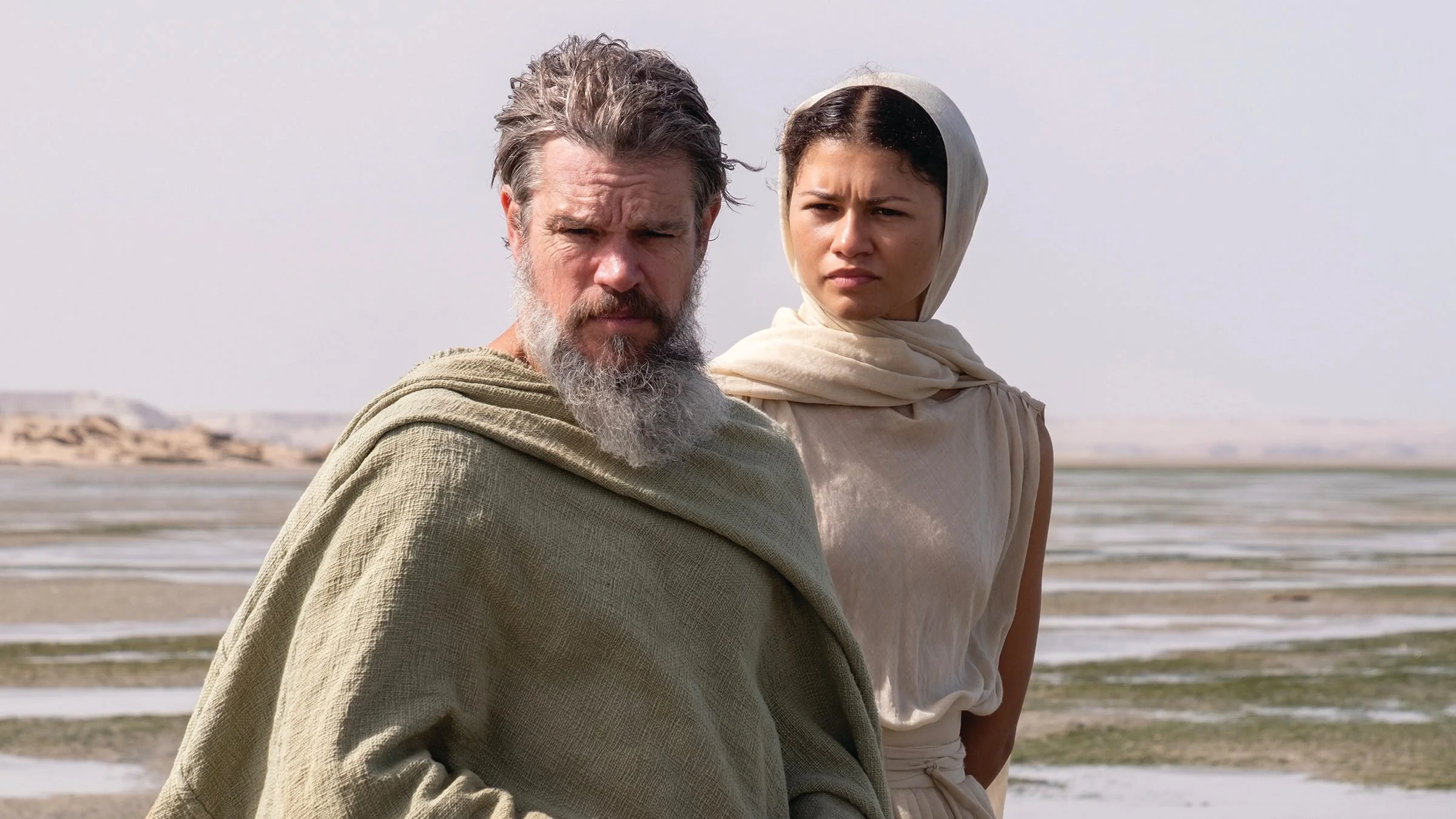
The Odyssey is a story Christopher Nolan always had in him. His filmography is a collection of different takes on the tale of a great, complicated man who wants nothing more than to return home to his family. You can see this outline in Inception and Interstellar. “Home” is the entire thesis statement of Dunkirk. Memento and The Prestige’s protagonists live hollow lives after tragically losing their life partners.
Nolan has been making loose adaptations of the epic poem throughout his career, almost like a warm-up for the main event. He’s honed his craft as a visual and emotional storyteller on grand journeys through space, time, and dreams, so why not put it to good use with Greek mythology? His epic scope captures the grandeur and awe of the fantastical voyage, while his fascination with psychoanalyzing his filmic surrogates recontextualizes the story’s emotional core. Why would a man who claims to love his family above all else make so many decisions that keep him as far from home as possible?
The film opens in a world where warrior king Odysseus' (Matt Damon) victory in the Trojan War has reached legendary status. Countless figures can recall the story by heart even though the man himself has been missing for 20 years. All that’s left of him are distant memories and apocryphal tales. His son, Telamachus (Tom Holland), has only his father’s renowned deeds to fill his absence. The countless barbaric suitors (led by a joyously slimy Robert Pattinson) who are after the king’s wife, Queen Penelope (Anne Hathaway), have turned his palace into a slovenly house of debauchery and disorder. Things are clearly worse off without Odysseus’ presence. What’s the point of grand accomplishments if you leave your family with holes in their hearts and the people who recount your accomplishments disgrace your name and memory?
On the other side of the world, we follow Odysseus’ delayed journey home after his historic victory in the ten-year war. As he and his men travel the world and make countless way stops for food and supplies, they notice a sharp decline in civility and trust. People mistake them for “the people from the sea,” a fearsome band of marauders who leave death and destruction in their wake. It’s clear that things have gotten worse since the long campaign of bloodshed and conquest, and Nolan lets us observe this degradation from both sides of the story.
This film is undoubtedly constructed through a modern moral lens. I have a hard time believing that a 2026 audience would accept the Trojan War as anything less than an unnecessary conflict ignited by a few people in power for arbitrary reasons. What’s a bigger violation of trust and civility than a deceitful trick to destroy the enemy from the inside? The grandaddy of all betrayals empowers people worldwide to commit their own little violations. Take what you want, enter where you’re not welcome, do as you please at the expense of others. Nolan argues that war harms the entire world. When the powers that be carelessly break the social contract—Zeus’ law, as it’s called in this universe—why shouldn’t the rest of the world do the same?
But don’t let this moral analysis scare you off; the film is an absolute blast. Nolan knows this story has stuck around because of its episodic, adventurous nature, and he steps up to the plate with rousing confidence. The Cyclops, the Trojan Horse, the Sirens, Circe and the pigs, the arrow through the axe heads; Nolan does these classic scenes justice. Even if you’ve never read The Odyssey, you know these episodes through cultural osmosis, and you can tell how giddy Nolan is to bring them to life on the big screen. He applies his grounded, practical filmmaking philosophy to the poem’s larger-than-life creations, making them feel tactile and real. You can practically feel the Cyclops’ dry, stretched skin and smell the body odor and waste in the claustrophobic Trojan Horse. He squeezes every drop out of the fabled IMAX 70mm cameras, imbuing each shot with breathtaking enormity. Each time the film cut to a wide shot of Odysseus’ ship at sea, you could hear the audience holding their breath in awe.
You can tell how much Nolan’s grown as a filmmaker through his willingness to play with the story’s surreal imagery. He’s always been a filmmaker of scope and grandeur, but only recently has he allowed himself to experiment with fantastical visuals. In my favorite sequence, he fully embraces the nightmarish body horror of Circe (a standout Samantha Morton) transforming Odysseus’ men into pigs. In a filmography chock full of grand spectacle and awe, Nolan’s never sent my jaw to the floor until this scene. Watching the jaded witch physically twist and pull the men’s faces into porcine features made me squirm in my seat. Between this sequence and the desolate, haunting depiction of the underworld, Nolan definitely has a horror film in him. I guarantee you that if he makes that jump, he’ll break the record for the loudest horror movie in film history.
But even though Nolan dips his toe into the fantastical elements of this story, the film is more grounded and restrained than the version you might have in your head. You won’t see the gods plotting and scheming on Mount Olympus. Hermes doesn’t make an appearance to negotiate Odysseus’ release from Calypso. You’re down in the muck and mud with the humans. The big hitters like Zeus and Poseidon remain unseen forces, standing in for prayer, luck, misfortune, and bad karma. The humans may attribute their lives and destinies to ancient deities, but their flawed choices and desires ultimately drive the story.
Damon serves as the perfect avatar for an imperfect man whose personal gain and ambition steer him and his men towards destruction. He may be an inspiring leader and an imposing figure, but his actions reveal pettiness and arrogance. He makes several choices throughout his journey that leave you scratching your head in frustration. You understand the desire to make a name for himself in a great war, but once he’s on the journey home, you question why he takes that unnecessary shot at the Cyclops or chooses to put himself through the Sirens’ song. This doesn’t seem like the great man Telemachus keeps hearing about from people who knew him.
But once the king finally makes it home and confesses why he intentionally delayed his return, the whole film clicks into place. Before the big, exciting climax, Odysseus reunites with his long-suffering wife in a patient, quietly devastating scene. Here, the film’s big ideas take center stage, including a fantastic reveal about Zendaya’s portrayal of Athena that floored me. Nolan expertly hides his hand throughout the story. The film hints at a deeper pain through clever editing (Jennifer Lame, the GOAT), but you’re too swept up in the grandeur of the journey to think about why Odysseus keeps choosing the path that takes him further from his loved ones.
I won’t give the reveal away, but it’s such a thematically rich idea, and I’m surprised no one’s tried it before with this source material. Nolan gets a lot of flak for his cold, intellectual sensibilities standing in for emotional investment in his stories and characters. While he crafts The Odyssey from a place of technical wizardry, I think he absolutely grasps the emotional core of this ancient text. By the end of the film, you feel a sense of accomplishment, but there’s a bittersweet feeling that you’re making up for lost time in a world that’s worse off because of your actions. Like many a Nolan protagonist, Odysseus makes it home, but much like in Interstellar, what else is there to do but set off into an unknown world once the one you’ve left behind becomes foreign to you?
★★★★½