‘Mother Mary’ review
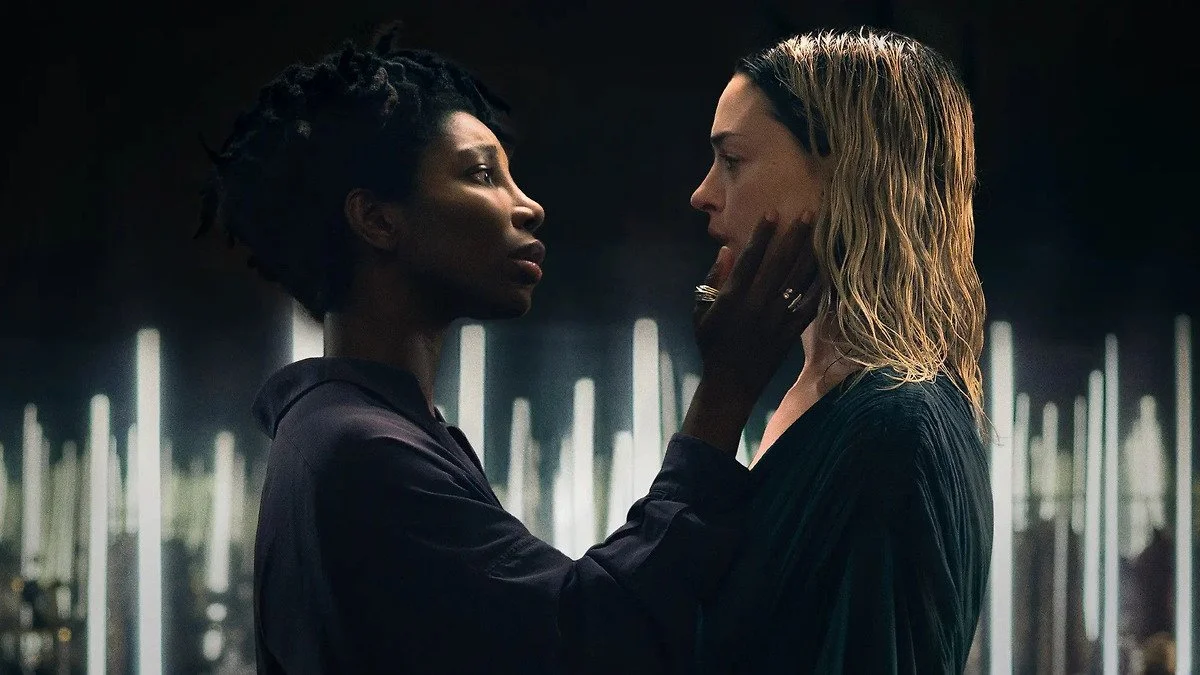
Mother Mary makes great use of its pop star and stagecraft aesthetics. David Lowery infuses each concert scene with jaw-dropping spectacle that reflects the ecstatic joy of experiencing your favorite artist in person. The black box-esque setting allows the film to play with limited space and theatrical effects, imbuing the flashback scenes with expressionist beauty. The “spirit” that brings our two leads together reminds me of the classic theatre technique of pulling red fabric out of an actor’s costume to represent blood. All of these visual choices are marvels to behold on a big screen, proving once again that Lowery is one of our boldest cinematic artists. So it’s unfortunate that the scenes in between the big set pieces don’t reach that same level of energy and wonder.
Mother Mary spends the majority of its screentime as a dreary chamber piece. Our two leads dressed in dark clothes speak to each other in self-serious, hushed tones. The majority of the set is lost in a dark blob that blends into the background. The two actresses in focus are absolutely at the top of their game and create a real sense of personal history through the flowery dialogue, but the oppressive tone weighs them down into a coma-inducing lull. The film uses this time to dig into the double-edged sword of creative partnership and the bodily trauma of psychological wounds, and it explores these themes with visual panache. I just wish a film with one foot in the horror genre and another in one of our campiest art forms had more fun with its compelling premise.
When legendary pop star Mother Mary (Anne Hathaway) experiences a personal crisis right before a big comeback performance, she rushes to her former friend and costume designer Sam (Michaela Coel) in a desperate attempt to regain her artistic agency. Even though the two didn’t part on good terms, Sam reluctantly agrees to make her a new dress, on the condition that she can air out her grievances about Mary’s betrayal. The film uses this premise to dig into the complicated dynamics of artistic collaboration. How can Sam claim ownership of her art when it’s in the service of someone else? Does Mary get to fully own her image if it doesn’t exist without someone else’s artistic input? The fact that we never learn Mary’s proper name leaves her with no identity outside of her stage persona.
These questions allow the two to litigate their dissolved friendship. The red cloth “ghost” is a manifestation of the deep wounds shared by our two leads. It draws them back together and forces them to patch up their broken relationship through creation. Lowery brings this character to life through elegant lighting and puppeteering. I couldn’t take my eyes off it anytime it was on screen. It allows the film to blur the line between reality and fantasy, but it’s almost too tidy a conceit. For a film that plays so much with expressionism, it points to its visual metaphors so clearly and leaves little room for discussion or interpretation.
Where Lowery truly succeeds with this spectral effect is his ability to play in the psychological horror sandbox. The 2nd half of the film reveals its Exorcist-inspired roots as Mother Mary discloses her possession by the red spirit. This idea represents the dark side of fame and idolatry. Anne Hathaway does a phenomenal job embodying the character’s broken, fragile mindset. She seems like she’ll break at the slightest touch, but when she performs her new dance for Sam, she throws her whole body into it. Something else comes over her as she thrashes and convulses around the room, reminding me of Possession and Luca Guadagnino’s Suspiria remake. While the film thrives visually in these horror pastiches, they unfortunately cloud the story’s emotional throughline.
Mother Mary is lost and broken when she runs back to Sam, but it’s not entirely clear why. The film hints at some vague idea of taking on the crowd’s energy and not being able to handle it, but it doesn’t communicate to the audience the downside of fame beyond the crumbling of an old friendship. The portrayal of Mary’s fall from grace as a demonic possession with a seance gone wrong robs the audience of a gradual decline into self-destructive behavior. Even when we see Mary pre-possession and post-Sam’s exit, she still seems like her kind, cheery self.
The film lacks a true rock-bottom downfall for Mary. Instead of her inner pain manifesting as withdrawn depression, how much more effective would it have been to see her lashing out at her peers and creating a toxic work environment? We have so many examples of pop stars as problematic bosses, and we’d have an easier time connecting to Mary’s trauma if it had completely changed her behavior. But the film doesn’t explore her pain in a way that feels relatable or tangible.
But even if the film’s emotional center leaves you cold, the visual spectacle can’t be denied. The immaculate outfits infused with religious imagery and the gigantic projections of Mary surrounding the stage during her concerts drive home the theme of pop stars as modern-day religious icons. I have to praise Hathaway again for weaponizing her theatre kid persona and fully embodying the swagger and sensuality of a natural-born performer. I just wish the film had at least a little fun with the camp of its subject matter. When you have spectacle inspired by Taylor Swift, outfits drawn from Lady Gaga and Bjork, and original songs written by Charli XCX, you’d be forgiven for expecting some pop fun infused into your movie. But the film is too lost in its martyr complex to embrace the art form full-heartedly
★★★½